Smart Oil-Quality Sensors: The Future of Commercial Fryer Oil Management
Cooking oil is one of the biggest recurring costs in any fry-heavy kitchen, and it is also one of the easiest to waste. Many operators still decide when to change it by color, smell, or a fixed schedule. That means oil is often dumped while it still has usable life, or kept in service until fries turn dark, greasy, or off-tasting.
Smart oil-quality sensors are changing that. By measuring how much the oil has broken down and flagging when it's time to change it, they replace guesswork with real data. The result is lower oil costs, more consistent food, and fewer surprises during a rush. Paired with a well-maintained fryer, they give commercial kitchens a far more reliable way to manage one of their most important ingredients.
This blog explains what smart oil-quality sensors are, how they measure oil condition, the benefits they offer, and how to choose the right sensor and supporting fryer parts for your kitchen.
Table of Contents
What Are Smart Oil-Quality Sensors for Commercial Fryers?
How Smart Fryer Oil Sensors Measure and Track Oil Quality
Why Fryer Oil Quality Matters for Food Cost, Quality, and Kitchen Safety
Key Benefits of Using Smart Oil-Quality Sensors in Commercial Kitchens
What Are Smart Oil-Quality Sensors for Commercial Fryers?
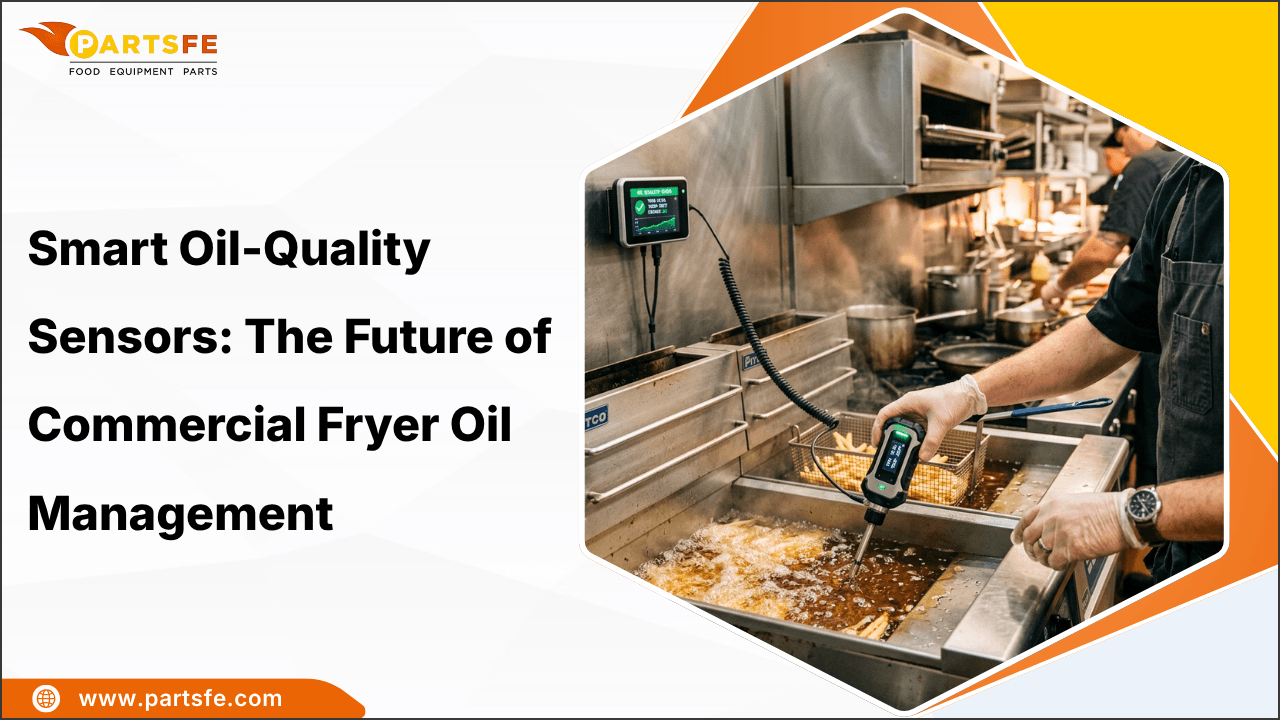
Smart oil-quality sensors are devices installed in or alongside a commercial fryer that measure the condition of the cooking oil in real time. Instead of judging oil by how it looks, smells, or how long it has been in the vat, operators get a data-based reading of how much the oil has broken down.
Here is what they typically do:
- Measure oil degradation: Most track total polar materials (TPM), a key indicator of how much the oil has broken down.
- Provide real-time readings: Results appear on a display, a connected controller, or a mobile or cloud dashboard.
- Send alerts: Many models signal when oil is nearing or has reached the end of its useful life.
- Track related data: Some also monitor oil temperature and fry cycles, and flag when a fryer runs outside its normal range.
- Log results: Stored readings help with quality control, audits, and comparing fryers across locations.
Smart sensors take the guesswork out of oil changes, helping kitchens cut waste, keep food quality consistent, and manage oil with confidence.
How Smart Fryer Oil Sensors Measure and Track Oil Quality
Smart fryer oil sensors measure how much the cooking oil has broken down by detecting changes in its electrical properties. They convert that change into a reading, usually an estimated total polar materials (TPM) level, that tells you how much life the oil has left.
Total Polar Materials (TPM): What the Sensor Is Looking For
As oil is used, it breaks down over time due to repeated exposure to heat, moisture, and food particles. This breakdown produces compounds known as total polar materials (TPM), and the more TPM in the oil, the more degraded it is. Fresh oil typically sits in the 0% to 5% TPM range, which is considered ideal for frying, while food quality starts to noticeably decline once TPM climbs to around 14% to 18%.
Industry guidance commonly places the practical discard threshold between 24% and 27% TPM, and many operators treat this range as their internal benchmark for when oil needs to be changed.
How the Sensor Takes a Reading?
- The probe contacts the oil. It sits in the fryer vat or in the oil return line, where it stays in contact with the hot oil.
- The sensor measures the oil's dielectric properties. Polar compounds change how the oil responds to an electrical signal, so more TPM means a different reading.
- Temperature is factored in. Oil temperature affects the measurement, so many sensors track it and adjust the result for accuracy.
- The reading is converted to a TPM estimate. The sensor's electronics translate the electrical signal into a TPM percentage or a simple scale.
- The result is displayed. It appears on the sensor, the fryer controller, or a connected dashboard, often with a color-coded or alarm-based alert when oil reaches its limit.
The result is a clear number you can act on, so oil is changed based on its actual condition instead of a guess.
Why Fryer Oil Quality Matters for Food Cost, Quality, and Kitchen Safety
Fryer oil is more than a cooking medium. It affects your budget, your menu, and how smoothly your kitchen runs. Well-managed oil saves money and produces better food, while neglected oil quickly becomes a costly problem.
Impact of Fryer Oil Quality on Commercial Kitchen Operating Costs
Oil is one of the largest recurring expenses in a fry-heavy kitchen, so how you manage it shows up directly in your bottom line.
- Fresh oil purchases: Changing oil too early means buying more of it than you need.
- Labor: Every oil change takes staff time away from other tasks.
- Disposal: Used oil must be handled and discarded, which adds to your costs.
- Wasted food: Letting oil run past 24% to 27% TPM can ruin batches and lead to unhappy customers.
Knowing the true condition of your oil helps you change it at the right time, not too early and not too late.
Effect of Degraded Frying Oil on Food Taste, Color, and Consistency
Oil condition shows up on the plate, and customers notice it quickly.
- Greasy texture: Broken-down oil can leave fried food heavy and oily.
- Dark color: Overused oil can darken food and make it look unappetizing.
- Off flavors: Degraded oil can add stale or unpleasant tastes to fried items.
- Inconsistent results: Food can taste different from shift to shift when oil is changed by habit instead of measurement.
Food quality typically starts to noticeably decline once TPM climbs to around 14% to 18%, so managing oil by measurement is one of the simplest ways to make sure fried items taste the same on a busy Friday night as they do on a slow Monday morning.
Kitchen Safety and Food Safety Compliance Requirements
Oil quality also affects how safely and reliably your fryers run.
- Less predictable operation: Heavily degraded oil breaks down faster and can make fryer behavior harder to predict.
- Discard limits: Many countries and food safety authorities set limits on how degraded frying oil can be before it must be discarded, with several setting legal limits in the 24% to 27% TPM range.
- Equipment buildup: Poor oil quality can leave residue on heating elements and probes, straining your fryer.
- Documentation: Logged readings help show that oil was managed responsibly during audits and inspections.
Reliable readings help you stay within local requirements while protecting your equipment, your staff, and your customers.
Key Benefits of Using Smart Oil-Quality Sensors in Commercial Kitchens
Smart oil-quality sensors give kitchens a clear, objective way to manage oil, and the payoff shows up across cost, quality, and daily operations. Instead of changing oil on a hunch, operators can act on real data and get more value from every fill.
Here are the main benefits:
- Lower oil costs: Sensors show when oil still has usable life, helping you avoid discarding it too early. Many kitchens find they can extend oil life without sacrificing quality.
- Better, more consistent food: Changing oil at the right moment, before TPM climbs past the 14% to 18% range where food quality starts to decline, keeps flavor, color, and texture steady from batch to batch.
- Fewer guesswork decisions: Objective readings take the judgment call out of individual employees' hands, which helps multi-shift kitchens and teams with high staff turnover.
- Stronger compliance records: Sensors that log readings can help document that oil was managed responsibly, which is useful for audits and inspections.
- Reduced waste: Using oil for its full useful life means less used oil to dispose of and fewer purchases over time.
- Proactive maintenance: Unusual readings or temperature patterns can point to problems such as a failing thermostat, a dirty vat, or a filtration issue before they turn into downtime.
Together, these benefits make smart sensors a practical upgrade for any kitchen that wants to cut waste and keep fried food consistently good.
How to Choose the Right Oil-Quality Sensor for Your Fryer
The right sensor depends on your fryers, your oil volume, and how much data you want. Comparing a few key points up front helps you avoid compatibility problems and get reliable readings from day one.
- Fryer compatibility: Make sure the sensor fits your fryer type (gas or electric), vat size, and the oil you use.
- What it measures: Look for total polar materials (TPM) readings at minimum. A sensor that only tracks oil level or temperature won't tell you when the oil is worn out.
- Accuracy and calibration: Ask how the sensor is calibrated and how often it needs recalibration, so readings stay consistent from shift to shift.
- Ease of use: Clear displays and simple alerts help busy staff read results at a glance.
- Connectivity and reporting: Data logging and cloud dashboards are useful if you manage multiple fryers or locations.
- Durability: The probe should handle high heat, grease, and frequent cleaning without losing accuracy.
- Support and parts availability: Choose a sensor with a solid warranty and easy access to replacement probes, so a damaged part doesn't leave you without readings.
- Cost and return on investment: Weigh the upfront price against your yearly oil spend. In high-volume kitchens, fewer premature oil changes can help a sensor pay for itself.
- Installation and setup: Check whether the sensor mounts in the vat or oil return line, whether it needs professional installation, and whether it works with your existing fryer controls.
Oil Test Kits and Test Strips: A Simple Way to Check Oil Condition
If you're not ready for a built-in sensor, or you want a backup check, oil-testing options that help you base oil changes on data.
Test kits and test strips typically measure free fatty acid (FFA) levels rather than TPM. Most strips read FFA in the 2% to 7% range, with 5.5% to 7% generally considered the discard range. To use one, dip the strip or test card into the oil for a few seconds, then compare the color change to the chart provided with the kit. This gives a quick, low-cost read on oil condition without needing an electronic device.
Here are a few different options available at PartsFe, ranging from test kits to test strips:
| Product | Type | Best For | More Info |
|---|---|---|---|
| 3M Corp 378918 Fryer Oil Test Strips (40 per vial) | Test strips | Quick, low-cost routine spot checks | Check More Details |
| Allpoints 5381000 2-Color Fryer Oil Test Kit | Visual test kit | Helping staff judge when oil should be changed | Click Here for More Info |
| Miroil Fryer Oil Test Kit (Part# 7pcm) | Test kit | Checking oil condition on the fryer line | Check More Details |
| Miroil Fryer Oil Test Kit (Part# 55072) | Test kit | Checking oil condition on the fryer line | Click Here for More Info |
Whichever option you choose, a sensor or test kit works best alongside good habits like regular filtration, proper skimming, and consistent fryer cleaning, so your oil readings stay meaningful and your oil lasts longer.
Check out The Ultimate Guide to Commercial Air Fryers: How to Choose, Use, and Clean for tips on picking the right unit and keeping it in top shape.
Summary: Smart Sensors Make Fryer Oil Management Simpler
Smart oil-quality sensors replace guesswork with real data. By measuring how much the oil has broken down, they help kitchens change oil at the right time, which cuts oil costs, keeps fried food consistent, and supports safety and compliance.
Choosing the right sensor comes down to a few key points: compatibility with your fryers, what it measures, accuracy, ease of use, reporting, durability, support, cost, and installation. If you're not ready for a built-in sensor, PartsFe's oil test kits and test strips offer a simple, low-cost way to start managing your oil with data.
Key Takeaways
- Sensors measure oil breakdown, usually as TPM, so you know when to change oil.
- Better oil management lowers costs and keeps food quality consistent.
- Compare compatibility, measurement type, accuracy, and support before buying.
- Test kits and test strips are an easy, affordable starting point.
- A well-maintained fryer helps your oil last longer and keeps readings reliable.
Keep your kitchen running at its best with PartsFe, your trusted source for quality commercial kitchen equipment parts. From oil test kits and test strips that help you check oil condition and change it at the right time, to fryer parts like temperature probes, filtration supplies, and valves that keep your equipment running smoothly.
References:
https://www.sefa.com/kitchenbiz/post/frymasters-oil-quality-sensor
FAQs
What is TPM, and why does it matter?
TPM stands for total polar materials, compounds that form as heat, moisture, and food particles break down frying oil. The higher the TPM level, the more degraded the oil, which makes it the standard measure for deciding when oil should be discarded.
How do smart sensors help reduce fryer oil costs?
Sensors show when oil still has usable life, so you avoid discarding it too early. They also help you avoid keeping oil in too long, which can ruin food and lead to wasted batches. Both cut the cost of fresh oil, labor, and disposal.
How often should I test my fryer oil?
It depends on your volume and menu, but many kitchens check oil daily or every shift. Heavy-use fryers and oils used for breaded or high-moisture foods may need more frequent checks. Follow your oil supplier's and local health department's guidance.
Are oil test kits and test strips a good alternative to a built-in sensor?
Yes, they are a simple, low-cost way to check oil condition, especially if you're not ready to invest in a built-in sensor. Many kitchens also use them as a backup check alongside a sensor.
Disclaimer: This blog is for informational purposes only and provides general guidance on fryer oil management. Figures may vary by region and equipment.