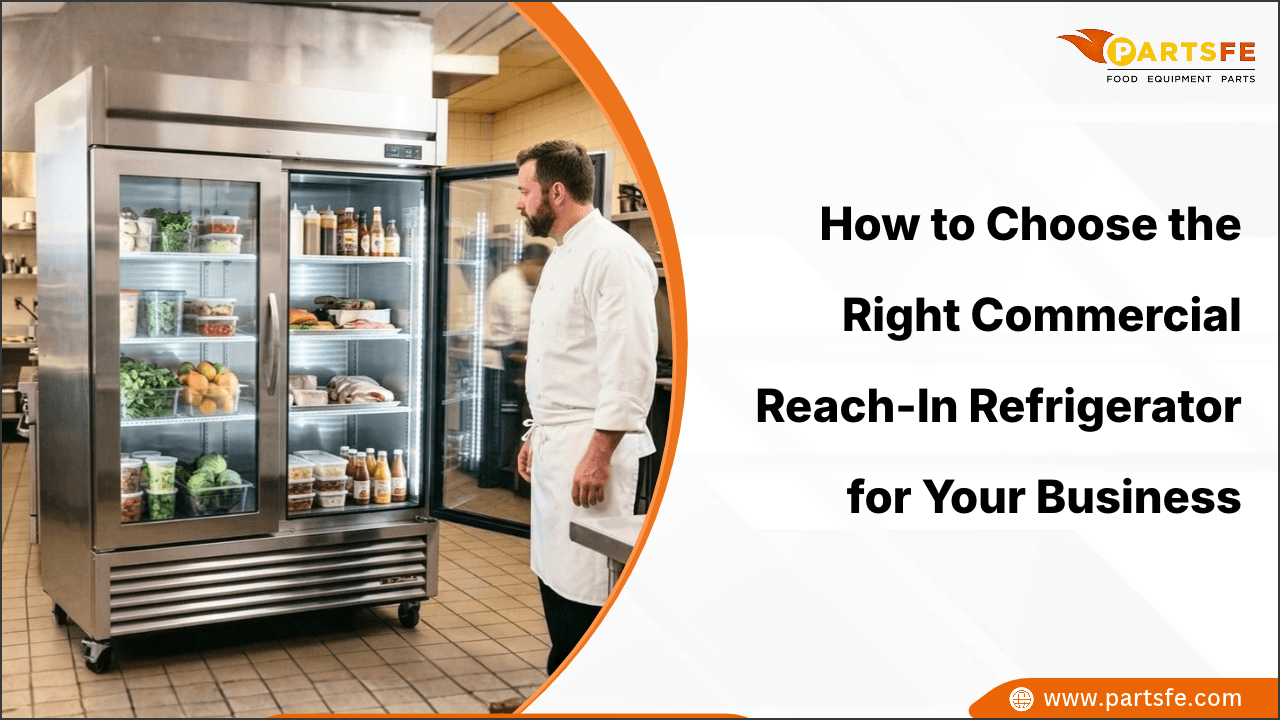
How to Choose the Right Commercial Reach-In Refrigerator for Your Business
A commercial reach-in refrigerator plays an important role in keeping ingredients fresh, organised, and ready for service. But with different refrigerator types, sizes, capacities, and configurations available, finding the right model for your business can be challenging. The best option depends on your storage requirements, available space, daily operations, and budget.
In this guide, we’ll explain what a commercial reach-in refrigerator is, explore the different types available, and highlight the key features to consider before buying. We’ll also compare commercial reach-in refrigerator costs by type to help you understand your options and make a practical purchasing decision.
Table of Contents:
What is a Commercial Reach-in Refrigerator?
Different Types of Commercial Reach-in Refrigerators for Your Business
Key Features To Consider When Choosing Commercial Reach-In Refrigerators
What is a Commercial Reach-In Refrigerator?
A commercial reach-in refrigerator is an upright, front-opening refrigeration unit used to store food, ingredients, beverages, and other temperature-sensitive products. It has a refrigerated storage cabinet that staff can access directly through one or more doors. Inside, adjustable shelves or racks organise products, while insulation helps retain cold air. These refrigerators are available with different cabinet sizes, storage capacities, door styles, and temperature-control systems to suit various commercial applications.
Looking for the right commercial reach-in refrigerator for your restaurant or foodservice business? PartsFe offers high-quality restaurant equipment parts and commercial refrigeration solutions to support your kitchen’s storage needs. Explore the available options to find the right fit for your business.
Different Types of Commercial Reach-In Refrigerators for Your Business
Commercial reach-in refrigerators are available in different configurations to match the size of your business, storage volume, available kitchen space, and type of products stored. Here are the common options and where each one fits best.
1. Single-Door Reach-In Refrigerator
A single-door refrigerator is a practical option when you need dedicated refrigerated storage but do not have enough inventory to justify a larger cabinet. Its smaller footprint can also make it easier to position near a preparation area.
Best for: A small café, coffee shop, bakery, food truck, or takeaway restaurant that mainly stores daily-use ingredients such as milk, cream, vegetables, sandwich fillings, sauces, and prepared foods. You get direct access to refrigerated storage without using as much floor space as a two- or three-door unit.
2. Two-Door Reach-In Refrigerator
A two-door model provides considerably more storage space for businesses that need to hold ingredients for multiple menu items. The additional cabinet space makes it easier to separate products by type, preparation stage, or frequency of use.
Best for: A medium-sized restaurant, deli, hotel kitchen, or catering operation that stores meat, seafood, vegetables, dairy products, sauces, and prepared ingredients. The larger capacity reduces the need to divide frequently used ingredients between several smaller refrigerators.
3. Three-Door Reach-In Refrigerator
A three-door refrigerator is intended for businesses with a high volume of refrigerated inventory. Its larger cabinet can accommodate more food containers, ingredient bins, and prepared foods while providing multiple access points.
Best for: A busy restaurant, hotel, banquet kitchen, institutional kitchen, or high-volume catering operation. The additional storage helps businesses manage large ingredient inventories without relying on several separate reach-in refrigerators.
4. Glass-Door Reach-In Refrigerator
Glass-door models make the refrigerator contents visible without opening the door. This is useful when employees need to locate products quickly or when refrigerated products are part of the customer-facing display.
Best for: A convenience store, supermarket, café, deli, bakery, or restaurant selling bottled beverages, desserts, packaged foods, sandwiches, and other ready-to-sell products. Staff can identify products at a glance, while customers can also see displayed items when the refrigerator is positioned in a sales area.
5. Solid-Door Reach-In Refrigerator
Solid-door refrigerators provide secure, enclosed storage for businesses that prioritize ingredient storage over product display. They are particularly useful in back-of-house areas where staff already know where ingredients are stored and do not need to see the contents through the door.
Best for: Restaurant kitchens, bakeries, catering facilities, prep kitchens, and institutional foodservice operations. The enclosed cabinet is well suited to storing bulk ingredients such as meat, dairy, produce, sauces, fillings, and prepared foods away from customer-facing areas.
6. Refrigerator-Freezer Combination
A refrigerator-freezer combination provides separate refrigerated and frozen storage within the same equipment setup. It can be useful when a business needs both temperature ranges but has limited space for separate full-size units.
Best for: A small restaurant, café, food truck, catering business, or compact commercial kitchen that stores both chilled and frozen ingredients. One equipment footprint provides access to both refrigerated and frozen inventory, which can be particularly useful where kitchen space is limited.
Key Features to Consider When Choosing Commercial Reach-In Refrigerators
Choosing a commercial reach-in refrigerator is not only about getting the largest model available. Capacity, kitchen space, product type, accessibility, temperature requirements, and running costs should all match the way your business operates.
1. Capacity: How Much Can You Store?
Capacity determines how much food and stock you can keep refrigerated at one time. Consider your daily inventory rather than choosing a unit based only on its maximum capacity.
- Small café: Around 10–20 cu. ft. may be suitable for limited daily stock.
- Medium restaurant: Around 20–40 cu. ft. can provide additional space for meat, produce, dairy, sauces, and prepared foods.
- Large restaurant or catering operation: 40+ cu. ft. may be more appropriate for high-volume refrigerated inventory.
2. Size: Will It Fit Your Kitchen?
Check the refrigerator's width, depth, and height, but also measure doorways, corridors, and the space required to open the refrigerator doors. Leave sufficient clearance around the unit for ventilation and staff movement.
For a small commercial kitchen, a large refrigerator may provide useful storage but leave too little room for food preparation or employee movement.
3. Door Configuration: How Frequently Will Staff Access It?
Single-, two-, and three-door models provide different levels of storage and accessibility.
- 1 door: Suitable for smaller operations with limited inventory.
- 2 doors: Useful for medium-sized restaurants requiring more organised storage.
- 3 doors: Better suited to high-volume operations with substantial refrigerated inventory.
Multiple doors can also allow staff to access one section without opening the entire cabinet.
4. Temperature Control: What Are You Storing?
Look for accurate temperature controls and an easy-to-read temperature display. The refrigerator should be capable of maintaining the temperature range required for the products you regularly store.
For example, a restaurant handling meat, seafood, dairy, vegetables, and prepared foods should prioritise consistent temperature control rather than simply selecting a refrigerator based on capacity.
5. Shelving: What Will Go Inside?
Consider the size and type of containers your business uses. Adjustable shelves allow the interior to be reorganised for food pans, ingredient containers, bottles, trays, and taller products.
If your kitchen frequently changes its menu or storage containers, adjustable shelving provides more flexibility than a fixed interior layout.
6. Solid or Glass Doors: Storage or Display?
Your intended use should determine the door type.
- Solid doors: Better suited to back-of-house ingredient storage.
- Glass doors: Useful when staff need to identify products quickly or when customers need to see beverages and packaged foods.
For example, a restaurant kitchen may benefit from solid doors, while a café selling bottled drinks and desserts may prefer glass doors.
7. Refrigeration Location: Top or Bottom Mount?
Commercial reach-in refrigerators commonly use top-mounted or bottom-mounted refrigeration systems. The location can affect maintenance access, airflow, and suitability for the kitchen environment.
A bottom-mounted system can make the refrigeration components easier to access, while a top-mounted configuration keeps the refrigeration section farther from floor-level dust and debris.
8. Energy Efficiency: What Will It Cost to Run?
Commercial refrigerators can operate continuously, making energy efficiency important for long-term operating costs. Compare the unit's energy consumption, compressor efficiency, fan motors, insulation, and temperature-control system.
For a business operating 12–24 hours a day, choosing an efficient refrigerator can have a greater impact on ongoing electricity costs than it would for a small operation with shorter operating hours.
9. Insulation and Door Gaskets: Can It Retain Cold Air?
Good insulation and properly sealing door gaskets help maintain the cabinet temperature by reducing heat transfer and cold-air leakage.
This matters particularly in busy restaurants, hotels, and catering kitchens, where refrigerator doors may be opened repeatedly throughout service.
10. Cleaning and Maintenance: Is It Easy to Service?
Consider how easily staff can clean the shelves, interior surfaces, door gaskets, condenser area, and other accessible components. Removable shelves and accessible refrigeration components can simplify routine maintenance.
Check out How to Choose the Right Commercial Refrigerator for Your Restaurant to compare available configurations and find the right fit for your kitchen’s storage needs.
Commercial Reach-In Refrigerators Cost by Type
Commercial reach-in refrigerator prices vary based on door configuration, capacity, construction, refrigeration system, and features.
The table below gives a general price range by type to help you compare the expected investment.
| Refrigerator Type | Typical Price Range | Suitable For |
|---|---|---|
| Single-Door Reach-In | 1,000–2,500 | Small cafés, bakeries, and restaurants |
| Two-Door Reach-In | 1,500–4,000 | Medium-sized restaurants, hotels, and delis |
| Three-Door Reach-In | 2,500–6,000+ | Large restaurants, catering, and institutional kitchens |
| Glass-Door Reach-In | 1,500–5,000+ | Cafés, supermarkets, convenience stores, and beverage service |
| Solid-Door Reach-In | 1,000–5,000+ | Back-of-house kitchens and food preparation areas |
| Refrigerator-Freezer Combination | 2,500–7,000+ | Businesses needing both refrigerated and frozen storage |
The final cost will depend on the refrigerator’s capacity, construction, refrigeration system, brand, and included features. When comparing models, consider the initial purchase price alongside storage capacity, energy consumption, maintenance requirements, and expected usage to determine the overall value for your business.
Summary: Finding the Best Commercial Reach-In Refrigerator for Your Business
The right commercial reach-in refrigerator should match your storage needs, kitchen space, business type, and budget. Consider the refrigerator type, capacity, door configuration, temperature control, shelving, energy efficiency, and maintenance requirements before making your decision.
Before purchasing, consider:
- Match capacity to your inventory: Choose enough storage for your daily stock without overbuying.
- Measure your space: Check unit dimensions and door clearance before installation.
- Choose the right configuration: Single-door models suit smaller operations, while two- and three-door models offer greater capacity.
- Consider door type: Glass doors suit visible products, while solid doors work well for back-of-house storage.
- Check temperature control: Consistent cooling is essential for refrigerated food storage.
- Compare operating costs: Consider energy use and maintenance alongside the purchase price.
Ultimately, compare the refrigerator’s capacity, features, price, and suitability for your daily operations to find the right fit for your business.
FAQs
What should I check before buying a commercial reach-in refrigerator?
Check the available floor space, refrigerator dimensions, door clearance, electrical requirements, ventilation space, storage capacity, door configuration, temperature range, and shelving layout. Also confirm that the unit can be moved into the kitchen and that service components remain accessible after installation.
How often should a commercial refrigeration unit be maintained?
Clean the interior, shelves, door gaskets, and condenser area regularly, while professional preventive maintenance should follow the manufacturer’s recommended schedule. High-use kitchens may require more frequent cleaning and inspections, particularly when grease, dust, or debris can accumulate around the condenser.
Why is temperature recovery important in a commercial refrigerator?
Temperature recovery determines how quickly the cabinet returns to its set temperature after the door is opened. This matters in busy restaurants, cafés, and catering kitchens where staff repeatedly access ingredients. Faster recovery can help the refrigerator maintain more consistent storage conditions during frequent door openings.
What is the difference between refrigerator capacity and usable storage space in a commercial refrigeration system?
Capacity is the refrigerator’s total interior volume, while usable storage is the space you can practically use for food products. For example, two refrigerators with the same cubic-foot capacity may provide different usable space because of differences in shelf dimensions, shelf spacing, evaporator placement, interior depth, and door configuration.


